10 Mahavidyas Temple of Haridwar: Complete Guide to Das Mahavidya Siddha Peeth
10 Mahavidyas Temple of Haridwar: Complete Guide to Das Mahavidya Siddha Peeth, History, Darshan & Spiritual Significance
Introduction to the Das Mahavidya Temple, Haridwar
The 10 Mahavidyas Temple in Haridwar is not just a devotional site but one of the rare Tantric Siddha Peeths in North India where all ten forms of Adi Shakti are worshipped together. Most people visit Haridwar for the peaceful flow of the Ganga, but if you want to find the city’s real heartbeat, you have to look for the Das Mahavidya Temple. It’s the kind of place that represents the Tantric side of spirituality. Here, the Goddess isn't just one story; she’s ten different powerhouses of wisdom tucked into a single, quiet sanctuary. The Das Mahavidya Siddha Peeth is located in the sacred town of Kankhal in Haridwar, Uttarakhand. Near Daksheshwar Mahadev Temple, Close to Har Ki Pauri.
What is a Siddha Peeth?
Shaktipeeth means a place chosen by Mother Nature (Sati) herself. According to legend, when Lord Vishnu used his Sudarshan Chakra to dismember the mortal body of Goddess Sati, the places where the body parts fell became Shaktipeeths.
Siddhapeethas are not the same.
These are sacred sites where sages and saints have awakened divine power through years of rigorous penance.
They are not merely temples or idols, but rather the energy of a person's unwavering determination, devotion, and faith.
Location and Atmosphere
10 Mahavidya Siddhapeeth is the main location.
One of Haridwar's most sacred and historic neighbourhoods, Kankhal, is home to this temple.
Haridwar district (Uttarakhand).
Area: Kankhal (about 4-5 km from the major city of Haridwar).
Speciality: The Daksheshwar Mahadev Temple is adjacent to this temple. This is the location of Mata Sati's self-immolation and King Daksha's yagna, according to legend.
The Spiritual Power of the 10 Wisdom Goddesses (Das Mahavidyas)
Understanding the Ten Forms of Adi Shakti
Mother Kali, who rules over time.
Kali is the fierce form of Shakti and is considered the living
embodiment of ultimate reality. Her name is associated with 'Kaal'-the time that is the basis of both creation and destruction.
"Tara" means "one who saves," meaning "one who takes us across." Mother Tara is believed to have four arms. She holds a sword, a severed head, a lotus, and scissors. The scissors in Mother Tara's hand symbolize that through her grace, bad habits, negative thoughts, and bondages in life can be cut.
Tripura Sundari, also known as Lalita and Shodashi, is considered the supreme form of Mahadevi in the Shakti tradition. She symbolizes the beauty, creation, and spiritual knowledge of the universe. According to the Lalita Sahasranama and various Shakta texts, Tripura Sundari is considered the Adi Mahavidya. It is believed that when there is an imbalance in the universe, Tripura Sundari restores balance.
According to the fourth Lalit Sahastranam, Goddess Bhuvaneshwari is the Ishwari, i.e., the queen of this world, i.e., the universe. According to the mythology, Goddess Bhuvaneshwari gave birth to the Trinity to run the creation.
When we see a picture or painting of Chinnamasta Mata, she is often depicted sitting on a couple (Kamadeva and Rati). This means that the Mother teaches control over lust and the senses.
Once, Goddess Parvati was taking a bath, and her attendants,
Dakini and Varnini were waiting outside. The Goddess took so long to bathe that the attendants standing outside became extremely weak from hunger and fatigue. When Goddess Parvati saw their condition, she was filled with compassion.
To soothe their pain, the Goddess cut off her head, causing three streams of blood to flow from her neck: two streams satisfied the hunger and thirst of Dakini and Varnini, while the third stream nourished her severed head.
Tripura Bhairavi is associated with Kaal Bhairav. She is beneficial to those with moral excellence and dangerous to those with negative qualities. Bhairavi represents the phenomena of creation and destruction, which are present everywhere. The goddess wears red clothes and has three eyes. According to mythological texts, the goddess performed an extremely difficult penance to attain Lord Shiva, a penance that stunned all three worlds. Tripura means mother of the three worlds. Mother Tripura Bhairavi is mentioned in the Durga Saptashati. She is worshipped to conquer enemies and attain physical pleasure.
Whenever the imbalance increases in the world, and devotees remember the Mother, the Mother incarnates in one of her forms to help the devotees. One of these forms is Mother Dhumavati. Mother Dhumavati is called the Mother of Widows. Ordinary married women do not often worship Mother Dhumavati. In this form of Mahadevi, which is considered a special form of Mahaparvati, the Mother appears as an old and frail widow.
Baglamukhi Mata is considered one of the most powerful goddesses in the world. Her forehead is adorned with a crescent moon, and her ears are adorned with earrings. Gods, humans, and women alike worship her. Baglamukhi Mata is also known as Pitambara. A yellow aura constantly emanates from her face, which is why the color yellow holds special significance in her worship. Invoked by Vishnu, she saved the universe from the heavy storm that occurred at the end of the Satyayuga.
Mother Matangi is a Mahavidya. Because of her green complexion, she is also known as the Forest Goddess. She is also known as Uchchhishta Chandalini or Matangini. In this form, she represents that part of nature that has not yet been revealed, about which we know very little. It is noteworthy that only a very small portion of nature has been revealed so far.
Goddess Kamala is considered an incarnation of Goddess Lakshmi. According to scriptures and scriptures, she appeared during the churning of the ocean, holding a lotus in her hand and radiating a golden glow. She is considered the goddess of prosperity, fertility, and fearlessness. Goddess Kamala bestows both material and spiritual happiness, bringing purity and prosperity to life, making life a blissful one.
Understanding Tantric Wisdom in Daily Life
Tantrism: A journey where every situation becomes a medium to awaken the light within you.
Nothing is "impure": We are often taught that this is right and
that is wrong, this is sacred and that is impure. But Tantra says that there is nothing in all of creation that is separate from God. Every experience, every soil, and every moment is complete and sacred in itself. The fault lies in our vision, not in creation.
Shakti: The Energy Within You: The Mother Goddess, or "Shakti," is not some distant, ether-like force. She is active in your breath, in your passion for work, and in your daily activities, both large and small. Every vibration of life is, in essence, the dance of Mother Shakti.
The History and Legends of the Temple
Connection to Daksha Prajapati and Sati
According to Puranic traditions, when Goddess Sati went to her father's Yagya ceremony against Mahadev’s advice, Prajapati Daksh deeply insulted Mahadev. Overwhelmed with anguish and fury, Mata Sati gave up her life right there. The very spot where she renounced her physical body is this sacred place.
Sati Kund: The temple complex still houses the Yagya Kund (fire pit) where Sati immolated herself. Devotees come here to pay homage to her sacrifice.
Right next to the temple is Daksh Ghat, where a stream of the Ganges flows. The water here is very cool and clean, making bathing here much more peaceful than in the main city.
Tale of Shiva and Parvati.
The Story Begins
The story begins when Sati's father, Prajapati Daksha, organizes a massive yagna. He deliberately does not invite Lord Shiva. When Sati learns of this, she insists on going to her father's house.
Mahadev explains to her: "Goddess, it is not right to go uninvited where there is no respect." But Sati made a decision to reform her father and change his attitude toward Mahadev.
The Manifestation
When Shiva repeatedly stopped her from leaving, Sati became enraged. This anger was no ordinary one, it was an explosion of cosmic energy. Mahadev saw that Sati had suddenly transformed into a terrifying and extremely powerful form.
Frightened (in a playful way), as Mahadev tried to leave, Sati divided herself into ten directions to stop him. Whichever direction Shiva ran, he found a new, gigantic, and supernatural form of the Goddess standing there.
Practical Information for Devotees (Darshan Guide)
Temple Timings and Best Time to Visit
Shree Daksheshwar Mahadev - Daksh Prajapati Temple
This is an extremely ancient and legendary temple dedicated to Lord Shiva. It is the site where King Daksha performed a yajna.
Timings: The temple is open daily from 6:00 AM to 8:00 PM.
Special: The temple is heavily crowded during the month of Shravan (July-August) and Mahashivratri, so it is best to visit early in the morning during other months for a peaceful darshan.
Sati Kund Mandir
This is the sacred place where Goddess Sati sacrificed her life in the fire. It is located very close to the Daksheshwar Mahadev Temple.
Opening hours: 6:00 AM to 12:00 PM and then from 5:00 PM to 8:00 PM.
Note: The temple is closed during the afternoon, so plan your visit accordingly.
Key Festivals: Navratri and Special Pujas
The festivals at the 10 Mahavidya Siddhapeeth and Daksheshwar Mahadev Temple in Kankhal are deeply spiritual . This place is a confluence of both Shakti and Shiva, making the celebrations particularly special:
1. Navratri: Nine (and Ten) Nights of Shakti
Since the 10 Mahavidyas reside here, Navratri here is distinct from the usual and holds tantric significance.
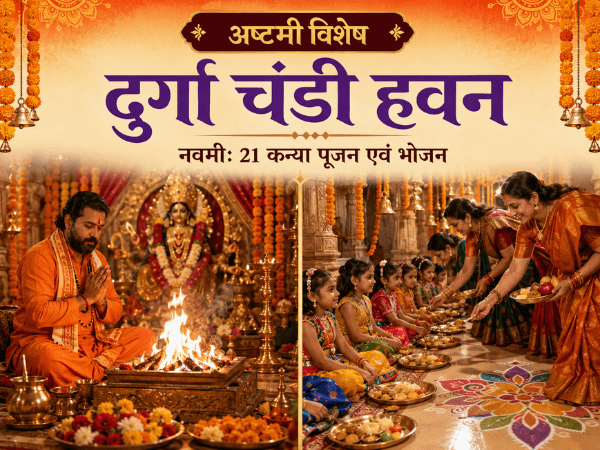
Chaitra and Sharadiya Navratri: During these two major Navratris, which occur twice a year, the Goddess is adorned with special ornaments. Each day, a special puja and havan (fire ritual) are performed for a different Mahavidya.
Gupt Navratri: This period is most significant for those who practice spiritual practices. The Gupt Navratri of the Magha and Ashadha months features special rituals, where practitioners perform secret worship of the 10 Mahavidyas.
Bhandara and Kanya Pujan: A massive Kanya Pujan is held here on the eighth and ninth day of the month, attracting devotees from far and wide.
2. Mahashivratri: The union of Shiva and Shakti
Mahashivratri is the biggest festival here due to the presence of the Daksheshwar Mahadev Temple.
Speciality: It is believed that the union of Mahadev and Sati took place at this place, and the story of their separation began here. On the night of Shivratri, 'Char Pahhar Ki Pooja' is held here.
Atmosphere: The entire Kankhal area resounds with chants of 'Har Har Mahadev'. The temple is decorated like a bride with flowers and lights.
3. Shravan Month (Shravan Maas)
The importance of Kankhal during the month of Shravan is considered equal to that of Kashi.
It is believed that Lord Shiva resides in Kankhal during the month of Shravan.
Kanwar Mela: Lakhs of Kanwariyas fill water from here and perform the Abhishek of Mahadev. The excitement during this time is worth seeing.
4. Special Pujas and Rituals
If you'd like to have your own personal puja performed here, here are some special rituals that are very popular:
Mahavidya rituals: For the fulfillment of a specific wish or removal of obstacles (such as Baglamukhi Puja or Kali Sadhana).
Rudrabhishek: Abhisheka performed with Ganga water and milk at the Daksheshwar Mahadev Temple.
Sati Kund Puja: Special lamp donation and puja are performed at the Sati Kund for marital happiness and the removal of obstacles.
A small tip: If you'd like to practice meditation or darshan in peace, visit during 'Gupta Navratri'. The crowds are less during that time and the energy level is much higher.
How to Reach: Connectivity from Har Ki Pauri and Railway Station
Connectivity from Har Ki Pauri
The distance from Har Ki Pauri to the temple is approximately 4 to 5 kilometers.
E-rickshaws and autos: This is the most accessible option. From the 'Laltarou Bridge' or 'Upper Road' near Har Ki Pauri, you can easily find both shared and private e-rickshaws to Kankhal.
Connectivity from Haridwar Junction Railway Station
The temple is approximately 3 to 4 kilometers from the railway station and the nearby bus stand.
Auto/Rickshaw: Autos and e-rickshaws are available 24 hours a day as soon as you exit the station. You can also take a rickshaw directly to Daksha Temple, Kankhal.
Private Vehicle: If you're arriving by car, turn right onto Kankhal Road from the station and reach the temple in 10-12 minutes. Ample parking is available near the temple.
Walking: Sati Kund Mandir and Daksheshwar Mahadev Temple are very close to each other, so once you reach Kankhal, you can explore both these places on foot.
Haridwar is not just a city on the banks of the Ganges, but it is a witness to the eternal union of Shiva and Shakti, teaching us the truth beyond life and death. The 10 Mahavidya Siddha Peethas and the Daksheshwar Mahadev Temple, nestled in the streets of Kankhal, remind us that what we perceive as an end is actually a new and more powerful beginning.
A visit here is not just about sightseeing, but an opportunity to recognize the 'Shakti' within us:
Fearless like Kali in difficult circumstances.
Guiding like Tara in the darkness of ignorance.
And rich and calm like Kamala in the busyness of life.
When you step on the sacred soil of Kankhal, where Mata Sati gave up her life, you realize the power of 'surrender'. Haridwar is not just a city of ghats and aartis; it is a corner where the story of Shiva and Shakti still floats in the air. As soon as you step into the quiet lanes of Kankhal, where there are 10 Mahavidya Siddhapeeths and the temple of Daksheshwar Mahadev, you understand that 'spirituality' is not a heavy word, but a feeling.
When you stand near the Sati Kund, where Mata Sati sacrificed everything, you realize that "sacrifice" and "surrender" are not signs of weakness, but rather the greatest strength in the world. This city teaches us that the body comes and goes, but the "sadhana" and "energy" we leave behind are what make a place a Siddhapeetha.
Frequently Asked Questions (FAQs)
Is there an entry fee for the 10 Mahavidya Temple in Haridwar?
No, there is absolutely no entry fee to visit the sacred Das Mahavidya Siddha Peeth in Kankhal, Haridwar. The temple is open to all devotees, pilgrims, and spiritual seekers free of cost. Whether you are visiting for simple darshan, meditation, or participating in special pujas, the experience is accessible to everyone. However, donations for temple maintenance and rituals are voluntary and completely based on personal faith.
How much time does it take to complete darshan at the 10 Mahavidya Siddha Peeth?
A peaceful darshan at the 10 Mahavidya Temple in Haridwar usually takes around 30 to 45 minutes on regular days. During major festivals like Navratri or Mahashivratri, the waiting time may increase due to heavy footfall. If you wish to perform special rituals or spend time in meditation near the Sati Kund, you may want to plan for about an hour. Visiting early in the morning ensures a calmer and more spiritually immersive experience.
Are guided tours available at the Das Mahavidya Temple in Kankhal?
There are no official government-guided tours inside the temple complex, but local priests at the Das Mahavidya Siddha Peeth often explain the temple’s history, legends, and the significance of the ten Mahavidyas upon request. If you are interested in a deeper understanding of Tantra, Shakti worship, or the connection with Daksheshwar Mahadev Temple, you can also hire a private guide in Haridwar who is familiar with the Kankhal temple circuit.
Can beginners in Tantra or spiritual practice visit the 10 Mahavidya Temple?
Yes, absolutely. The 10 Mahavidya Temple in Haridwar is open to all seekers, whether they are experienced practitioners of Tantra or complete beginners on a spiritual journey. While the temple holds deep Tantric significance, visitors are not required to follow any specific ritual path to enter. Many people simply come for darshan, prayer, or to experience the powerful spiritual atmosphere of this Siddha Peeth. The energy of the place is welcoming, not intimidating.
What is the best time to visit the 10 Mahavidya Temple in Haridwar?
The best time to visit the 10 Mahavidya Siddha Peeth in Kankhal is during Navratri, especially Chaitra and Sharadiya Navratri, when each Mahavidya is worshipped with special rituals. However, if you prefer a peaceful experience with fewer crowds, visiting during non-festival months or during early morning hours is ideal. Devotees also consider Mahashivratri and the month of Shravan spiritually powerful due to the temple’s close connection with Lord Shiva and the nearby Har Ki Pauri area.